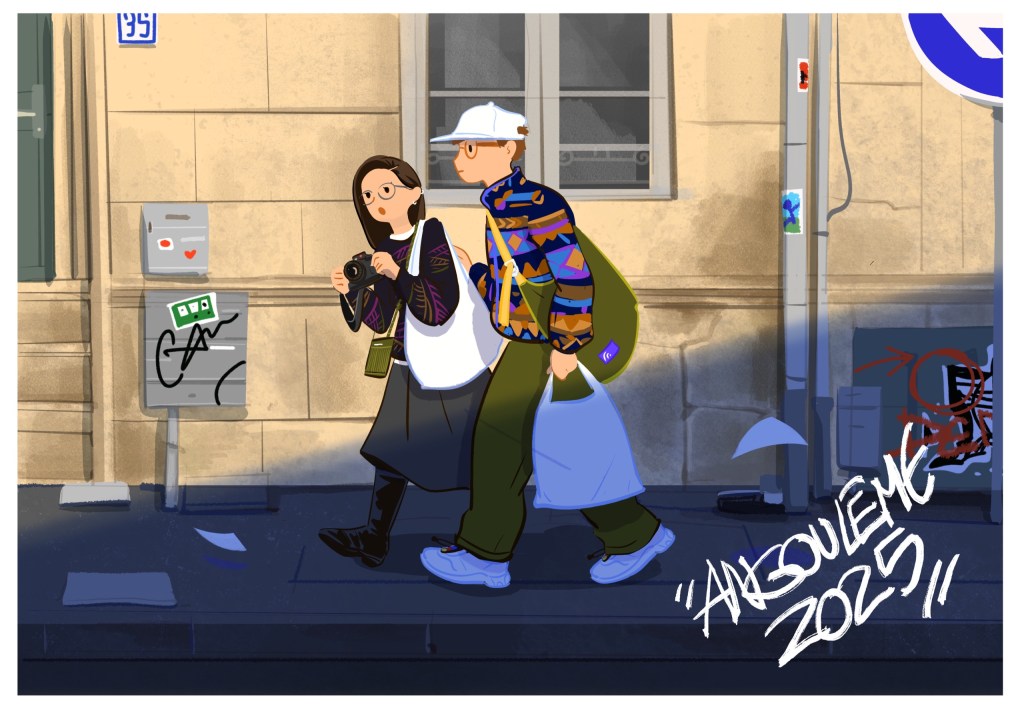
In March 2020, I sent my first love letter to K. I wrote him about the weight of spring while breathing in the scent of an unnamed white flower spilling in from my balcony; and I told him we should go to Montréal or Europe together someday. It was a strange sentence to write, to imagine tracing the spines of unknown cities with someone I had never met.
I sent K another letter in June telling him about my trip to Montréal with group of friends. I told him how badly I wanted to go back there, but with him this time. I imagined us in some crummy cheap little room far from downtown, not even caring. We’d catch the bus into the city if it looked cool enough, artsy enough. Otherwise, we’d walk beside the Saint Lawrence river, in Longueuil, and sit quietly. He would sketch. I would write something deliciously incomplete. Or perhaps we’d say nothing at all. Two people listening to the same silence.
Truth is, we had never been anywhere outside Asia together. I kept thinking about Europe. Perhaps I yearned for Paris to chase a version of ourselves — rebellious. Perhaps it was those nights at eighteen, spent with K, romanticizing the artist — the poor, beautiful failure drinking red wine on a Parisian patio, spitting truth into the void. Or because he once quoted Michelangelo on Facebook, and I imagined us beneath the Sistine Chapel, necks bent backward, searching for God in paint. Or maybe it was because my professor, that weary Frenchman, spoke of Renaissance art as if it alone could redeem humanity. Or perhaps, more simply, I wanted to step into the world outside of them — with him.
We never expected that five years later, we would find ourselves in France.
I was standing in the corner of the bubble tea shop I worked at and holding a jar of Jasmine green tea leaves and waiting for the water to reach seventy-five degrees. That was the right temperature. My phone lit up. A notification appeared. It read: Congratulations. You have been selected as the winner of the comic competition. You will be awarded a trip to the Festival de la Bande Dessinée d’Angoulême.
It wasn’t my email. It was his. My boyfriend’s. I had it on my phone.
I felt my chest go tight. I typed fast, tried to reach him. It was ten in the morning in Vietnam. He was probably in a meeting — talking about KPIs or whatever it is people talk about in meetings. He wouldn’t see the message. Then I went full chaos mode and started texting every single one of his sisters. All of them. Individually. Simultaneously. Lovely women, really, each with her own gentleness. And then his parents. Whole family. Over the moon. Like actually over the moon. As if the moon had lost its gravitational tether and swept them off their feet.
My hand was still shaking. Another girl I who work with came over and took the jar from me and turned off the stove; the water had already gone wild, boiling far beyond the 75 degrees we actually needed. Precision lost in the heat of emotion. She didn’t say anything. What she didn’t know — what nobody knew — was that I wasn’t just happy. I was relieved. Relieved because, after ten years of searching, of building himself piece by piece, of trying to understand how the world works, he was finally being recognized. And relieved because we haven’t seen each other in a year. A whole year. And now, suddenly, a door opened.
Angoulême.
France.
Us.

Well, because it’s Nancy, the way is always a little bit off.
What began as a journey of love between the two of us unexpectedly became something greater — a journey into the heart of the ninth art, where we discovered how deeply comics are honored and woven into the culture of Angoulême. It’s culture. It’s history. It’s ink and soul and some guy in a bookstore crying over a panel with no words in it.
Our love expanded — no longer just about us — but reaching outward: a love between the reader and the line, between strangers in a bookstore, between the city and the world it quietly holds inside.
January 28,
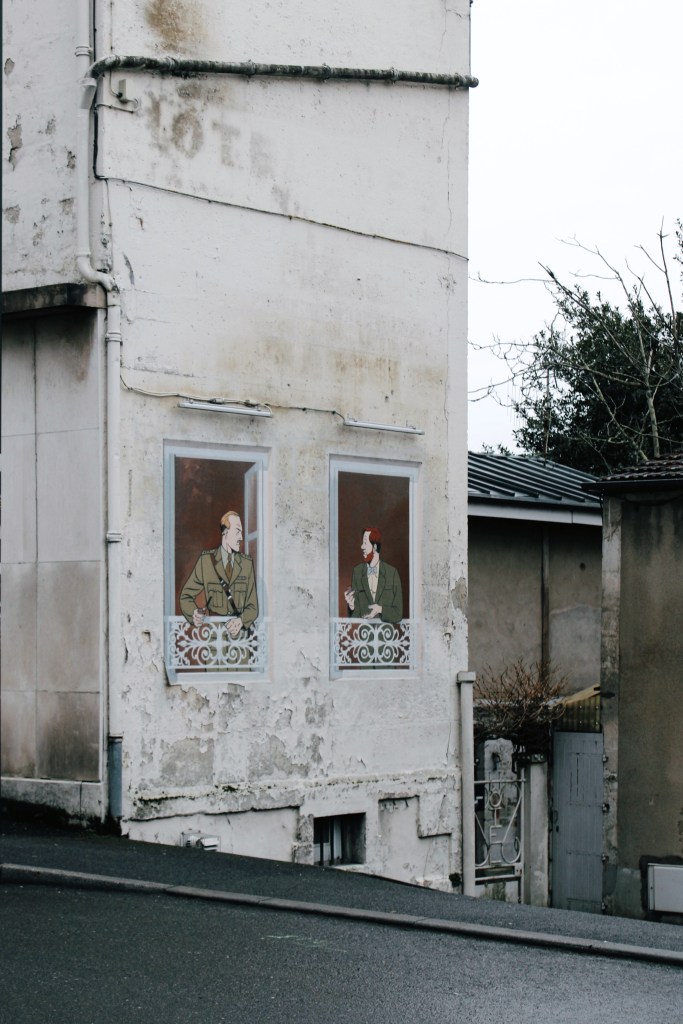
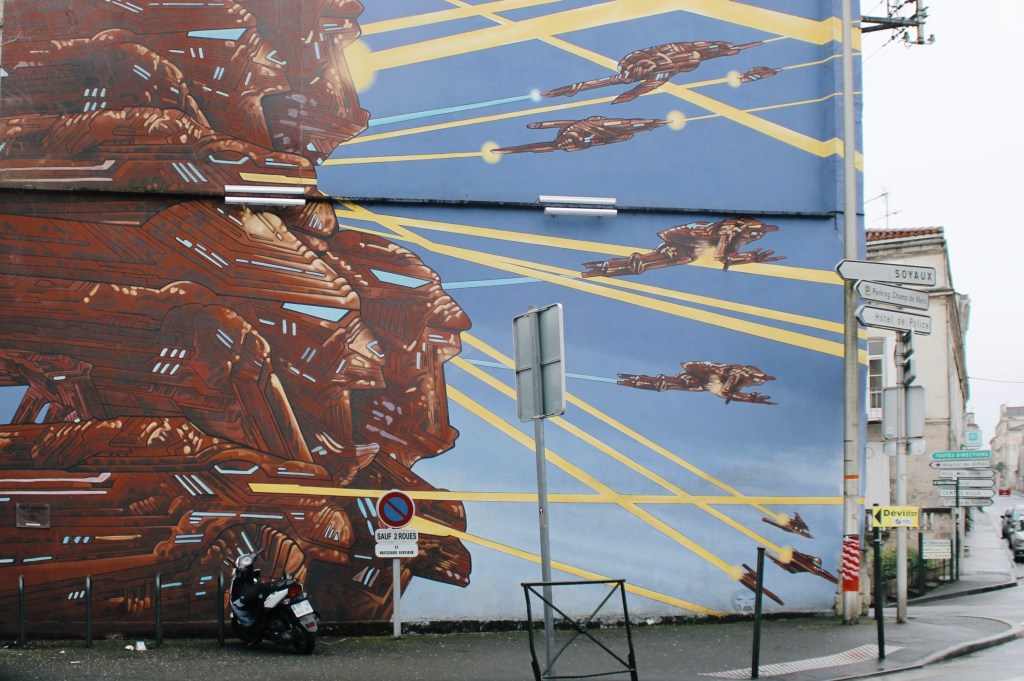
We got to Angoulême from two opposite ends of the world around midnight, stepping off the train into a cold breeze that was almost refreshing after the long journey. As we made our way up the hills, dragging our luggage behind us with the wheels stammering on the stone, we kept stopping to stare at these murals —huge, right there on the buildings, like the whole city had been built inside a comic book.
For a moment, exhaustion loosens its grip. We are children again, seeing something for the first time, something too big to name but simple enough to feel. How strange, to stand before a wall and feel it watching you back. How utterly thrilling, to belong, even for a moment, inside a story that was not our own.
We were ready for the next day.
January 29,
The rain started early. We had to collect our festival badges at Grands Salons de l’Hôtel de Ville and we had this dumb idea in our heads that Hôtel meant an actual hotel, a fancy modernist hotel. And of course, we got lost. But getting lost is its own kind of luck. We stop strangers with our pathetic French, gesture toward our phones. Nothing worked. Then we had an idea, look for people wearing badges because they must be staff or attendees — people who know the way. And then we lifted our heads, and suddenly — badges everywhere — on the small swinging ribbons of lanyards. The city itself had become the festival. Or perhaps, the festival had become the city.
The words exchanged with locals are mostly incomprehensible. Half the time, we didn’t know what people were saying, but they’d point, and that was enough. I remember boyfriend mumbling to me, “It’s fine, fuck it, really. We just need to figure out the general direction first, then we’ll keep asking”. We kept at it, stopping every few steps, nodding like we understood a damn thing, and somehow, somehow we made it to the Hôtel. The staff, eager, generous. We asked for directions- they took us by the hand. We asked if we may enter today- they did not simply say yes; they showed us the way, and guided us through. The whole thing fed by the endless murmurs of social media: the French are cold, the French are unkind, to be Asian here is to be unwelcome — just went up in smoke. A language not of words but of gestures, of hands guiding, of faces soft with welcome. It was a moment that confirmed what had already begun to feel obvious- Angoulême, during the festival, was a place where art and human connection mattered more than barriers of language or background.
The whole day was pretty much for publishers, so as artists, we couldn’t get in. Hence, we figured we would just wander around instead. The city is more than just murals — it was, at the roughest definitions, the way people live. Like everything, from the streets to the people themselves, had been sketched right into place, ink still fresh, colors still settling. My words for this city are just not enough for this.
January 30,
The adventure began. The day was bathed in bright sunlight.
We did our best to hit every spot and booth we could, but we ended up completely lost in Le Monde des Bulles et Place du Champ de Mars. Or, I hope that’s what it was called. The space was dominated by Franco-Belgian comic publishers and artists, offering a glimpse into the global comic scene, though I wondered if it could be called a glimpse at all — more like an immersion, a flood of color and form. I was struck by the extraordinary quality of the graphics. The printing standards at most of the publishers were exceedingly high, and although I was unable to fully comprehend the content, except 1984, the visual craftsmanship spoke for itself. It was a reminder of the vast potential for artistic expression, and in that moment, I was filled with a deep sense of inspiration.
We also made our way to the City of Manga. We walked down the hill, and from a distance, you could see it standing there, all serious-looking, next to the Gare Angoulême. We weren’t entirely unprepared for what I would find there. Still, the experience had its own weight, its own atmosphere, as if it belonged to a world both familiar and new. Here, we had the opportunity to speak with Yeung Lon Hei, a member of the Hong Kong Arts Centre team. He had previously worked in the fashion industry before transitioning to art, and he spoke candidly about the challenges of maintaining an online presence. The pressure to market oneself, to constantly share and promote, has become an unavoidable aspect of an artist’s life. And honestly, I’ve wondered about that a lot. Like, does one need to speak for their art, or should the art be enough? Is self-promotion an obligation for the artist, or merely a consequence of the times? Fortunately, institutions like the Institut français du Vietnam and events such as this festival offer a reprieve, where you can just be an artist, connect with people, and not feel like you’re running some never-ending self-promotion campaign. That’s something, isn’t it?
January 31,
Another sunny day. Wonderful.
I spent two hours in line for Witch Hat Atelier by Kamome Shirahama while my boyfriend was asleep on the lawn outside our homestay. Love is often the art of waiting in different places, at different paces, for the same thing. Initially, we had intended to queue on the first day, but the line was prohibitively long, so we abandoned the plan. On this day, it was even worse. The line was like double the size. But, well, it is what it is, right? The exhibition was packed with original sketches, and the whole setting, everything from the pieces to the vibe, felt like it was straight out of the story. I don’t really read the comic, but I could see why people are into it. What stood out to me, however, was the venue — a Renaissance hotel. The organizers had done an exceptional job of placing manga within such a historically significant building, preserving its integrity while still creating an atmosphere that felt distinctly comic-oriented. It was an impressive feat of balance between tradition and modernity.
I got back to the homestay and woke my boyfriend. We headed to the Musée du Papier, but when we arrived, the staff informed us it was closed. So we practically bolted to the Musée de la Bande Dessinée, half-expecting the same bad luck. But, lucky us, it was open. We spent the next two hours exploring its various spaces. The first section we encountered was illuminated by natural light, which fell across a hallway lined with paintings. The artists ranged in age from approximately 14 (or even younger) to well over 70. And here’s the thing, the paintings themselves were fine, good even, but the real magic was in the design thinking. The way they handled layout, the way colors played off each other — those elements that, if studied properly, could be invaluable. We moved further, through rooms filled with interactive exhibits, artworks by children, for children, each piece vibrating with a kind of youthful defiance, a belief in infinite possibilities. The decision to display student work, allowing visitors from across the world to engage with it during the festival, was particularly striking. It was not merely an exhibition; it was a statement — a celebration of creativity across generations and a demonstration of the enduring power of comics as a medium. A prize not of gold, but of permanence.
In the end, what struck me most was that comic lovers weren’t just the young readers we, as Asians, might assume. On the contrary, it was mostly middle-aged and older people.
In the end, it was then that I realized the festival itself, grand as it was, was not the most remarkable thing. The city was.
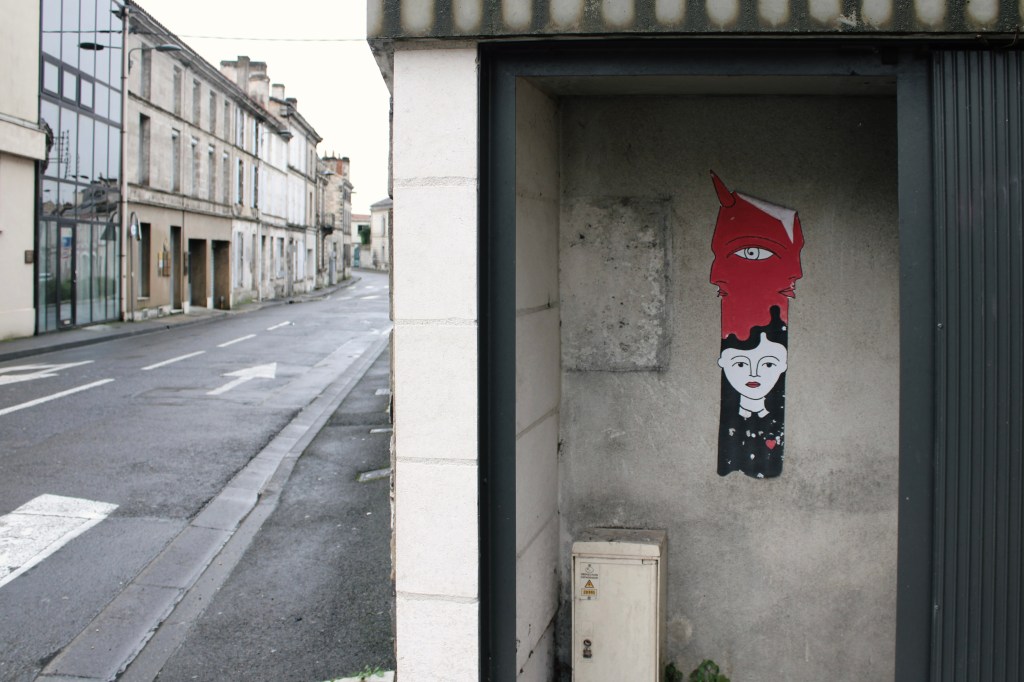
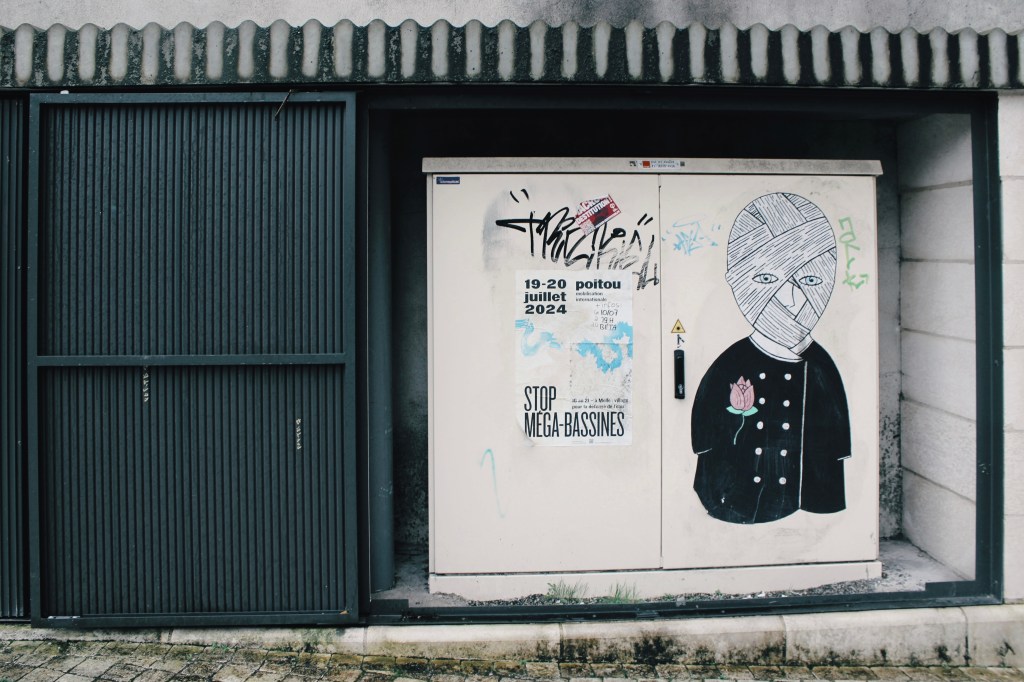
In Angoulême, comics aren’t just something you pick up when you’ve got nothing better to do. They are woven into the fabric of the city. They live in the streets, in the alleyways, in the very architecture. Posters, half-torn but stubbornly clinging on, graffiti sprawled across walls as if the artists couldn’t resist leaving their mark. Even the street signs, shaped like speech bubbles, make it seem as though the city is constantly speaking, caught mid-dialogue. And the murals- everywhere. They have grown with the people, seeped into the pavement, become part of the city’s pulse. The people themselves move as if they belong to the pages of a story, as much a part of the city’s narrative as the ink on its walls. There is no pretense to their love for comics- it is effortless, ingrained, real.
 daoofnancy.com